


June 24-26, 2026
Shenzhen Convention and Exhibition Center (Futian)


In recent years, the sensor industry has gained rising popularity across the hard technology sector and become a core track prioritized by capital markets and industrial players. From growing market attention on A-share smart sensing enterprises and robust financing for high-end sensors in the primary market, to accelerated layout by local governments and industrial capital, sensors are stepping out of the traditional positioning as low-value-added components. Evolving from industrial supporting parts into a fundamental sensing infrastructure connecting the physical and digital worlds, sensors have been redefined in terms of industrial strategic value, ushering in a new round of development opportunities for the industry.
The current sensor investment upsurge is not driven by short-term capital speculation. Instead, it is an inevitable result of the superposition of three major trends: large-scale commercialization of AI technology, comprehensive intelligent upgrading of manufacturing, and accelerated domestic substitution of high-end sensors. As the pivotal gateway linking the physical and digital realms, sensors serve as the core portal for capturing physical-world data. Sensing capability lays the foundation for AI and intelligent systems to interact with the real world. As the digital economy further integrates into the real economy, the core strategic status of sensors has become increasingly prominent — forming the fundamental logic behind heavy capital bets on the physical world gateway.
The sensor industry is witnessing a synchronized upturn in both primary and secondary markets. Capital layout features stronger activity, concentration on leading players, and focus on high-end segments, with overall industry attention continuing to rise.
In the primary market, financing in the sensor track remains vigorous. Since 2026, multiple 100-million-yuan financing deals have been completed, mainly pouring into high-end segmented fields such as tactile sensing, visual sensing, magnetic sensing, MEMS, and high-precision inertial sensing. Investment focus has gradually shifted from scale expansion to core technological barriers, application scenario implementation and customer operation capabilities. The industry leader effect keeps strengthening, driving higher valuations and capital concentration for high-quality enterprises, and sensors have become one of the key investment directions in hard technology.
In the secondary market, trading activity of smart sensing and sensor-related concepts has increased notably, with institutional funds showing sustained interest. Such market performance essentially reflects capital optimism over the long-term growth potential and industrial prosperity of the sensor sector. Multiple industrial institutions forecast that the global sensor market size will reach approximately 258.4 billion U.S. dollars in 2026, while China’s sensor market is expected to exceed 500 billion yuan. Growing far faster than the global average, China is evolving into a vital growth engine for the global sensor industry.
Dual support from favorable policies and industrial capital further accelerates industrial development. Regions nationwide have issued special policies to foster the sensor industry, set up industrial funds, and promote the construction of smart sensing industrial clusters. South China including Shenzhen and Dongguan has initially built a coordinated industrial chain system covering R&D, manufacturing, packaging and application, with continuous improvement in industrial supporting capacity.
Layouts by industrial capital carry greater strategic significance. New energy and technology giants such as CATL, BYD, Xiaomi and XPeng are accelerating investments in sensor enterprises via equity participation and strategic cooperation. Adopting the model of industrial coordination + scenario incubation, they strengthen supply chain security and technological independence, while accelerating the implementation of sensor technologies in new energy vehicles, humanoid robots, smart terminals and other fields — realizing two-way empowerment between technology innovation and industrial application.
The upgrading of sensors from peripheral components to core assets reflects a fundamental transformation of the industry’s underlying logic, with four core driving forces jointly underpinning its rapid growth.
First, AI deployment generates rigid demand, making sensors the data cornerstone of AI.Artificial intelligence hinges on data training and algorithm iteration, and sensors act as the exclusive data collection portal for the physical world. High-quality, multi-dimensional sensing data is the prerequisite for AI to land in real scenarios. Emerging tracks including humanoid robots, autonomous driving, AIoT smart devices and industrial AI have raised new requirements for sensors in quantity, precision and category. A single humanoid robot is normally equipped with dozens to hundreds of sensor nodes covering vision, tactile sensing, force sensing, inertial measurement and other dimensions. With the accelerated industrialization of humanoid robots, the sensor market will expand exponentially.
Second, domestic substitution enters a critical window with faster breakthroughs in the high-end market.For a long time, the global high-end sensor market has been monopolized by overseas giants including Bosch, STMicroelectronics and Honeywell, while most Chinese enterprises were confined to the mid-to-low-end segment. In recent years, rising global supply chain uncertainty, price hikes and supply shortages of foreign suppliers, coupled with continuous domestic R&D breakthroughs, have triggered explosive demand for domestic substitution of high-end sensors. Chinese firms have caught up technologically in MEMS sensing, infrared sensing, force sensing, tactile sensing and other niches, with product performance gradually approaching international standards. They enjoy distinct advantages in cost, delivery cycle and localized services, leaving enormous room for import substitution.
Third, downstream applications boom in full swing, shifting demand from single-track reliance to diversified growth.Sensor demand no longer depends merely on the traditional consumer electronics market, and has formed three core growth pillars: new energy vehicles, industrial automation, and healthcare.New energy vehicles carry several times more sensors than traditional fuel vehicles; higher levels of autonomous driving mean stronger demand for LiDAR, millimeter-wave radar, pressure sensors and temperature sensors. The upgrading of industrial automation drives rising demand for equipment condition monitoring, predictive maintenance and intelligent measurement & control, expanding the industrial sensor market steadily. The healthcare sector also fuels rapid development of biosensors, wearable sensors and medical testing sensors with increasingly enriched application scenarios.
Fourth, technological iteration drives industrial upgrading toward intelligent sensors.MEMS technology enables sensors to evolve toward miniaturization, low power consumption and high integration, serving as a critical technological foundation for consumer electronics, automotive electronics and industrial intelligence. Meanwhile, sensors are upgrading from standalone sensing devices to intelligent sensing nodes integrating sensing, computing, storage and communication. Equipped with capabilities such as data preprocessing, self-calibration, fault diagnosis and edge computing, they adapt to the distributed deployment demands of AIoT and Industrial Internet, continuously elevating the industry’s technical barriers.
Driven by dual changes in technology and market, the competitive landscape of the sensor industry is undergoing profound restructuring, with fundamental shifts in competition modes, value distribution and investment logic.
In terms of market pattern, the long-term monopoly of overseas giants in the high-end market is being broken. Chinese enterprises have achieved technological breakthroughs in segmented tracks such as tactile sensing, force sensing, infrared sensing and MEMS microphones. Leveraging cost-performance, rapid response and customized services, they are steadily capturing domestic market share and expanding into overseas markets. The industry is evolving from monopoly by foreign giants into a new pattern of differentiated competition and niche breakthroughs between Chinese and international players.
In terms of competition mode, the industry is shifting from standalone sensor component sales to ecosystem-based competition featuring sensors + chips + algorithms + system solutions. Leading enterprises no longer merely provide hardware products, but deliver one-stop sensing solutions for downstream clients, deeply binding customer needs, enhancing user stickiness, and building dual barriers in technology and ecosystem. This model fits complex scenarios such as autonomous driving, robots and industrial automation, becoming the mainstream trend of industrial competition.
In terms of industrial chain value distribution, profit margins are gradually shifting to the midstream. In the past, industry profits were concentrated in upstream core materials and manufacturing equipment. With breakthroughs in domestic materials and equipment and improved R&D capacity of midstream devices, the value proportion of midstream chips and modules keeps rising.
In terms of investment logic, capital no longer focuses solely on revenue scale, but places more emphasis on three core indicators: technological barriers, application tracks and customer resources. Independent intellectual property rights, layout in high-growth niche sectors, and access to supply chains of leading clients have become key factors determining enterprise valuation and growth potential, making industrial investment more rational and professional.
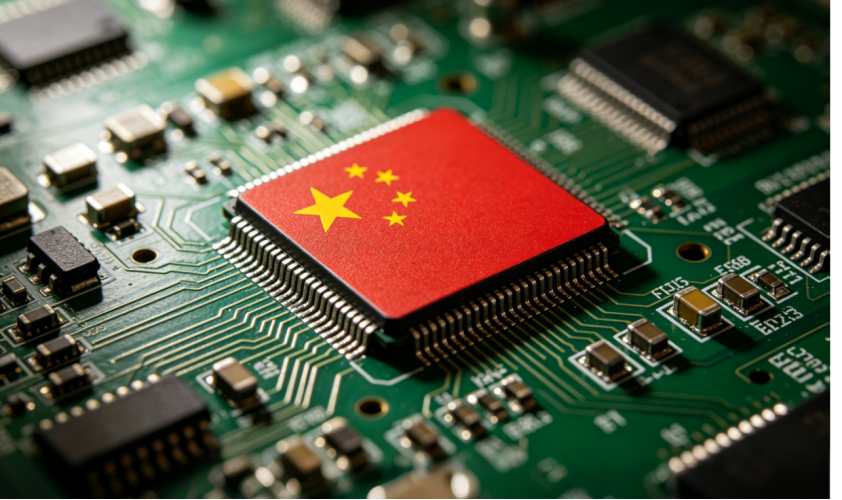
Despite broad prospects, the sensor industry still faces multiple bottlenecks that must be overcome to grow into a trillion-scale sector.
Technologically, domestic enterprises still lag behind global top players in cutting-edge fields such as high-end optical sensors, high-precision inertial sensors and quantum sensing. Core materials, high-end manufacturing equipment and advanced processes still rely heavily on imports, leaving room for improvement in independent controllability. Market-wise, massive capital inflows have intensified homogeneous competition in the mid-to-low-end market, and price wars have squeezed corporate profit margins, urging the industry to pursue high-end positioning and differentiated development. In terms of talent, the sensor industry is interdisciplinary, covering materials science, electronic engineering, mechanical manufacturing, artificial intelligence and algorithm software. The shortage of high-end interdisciplinary talents restricts industrial innovation. Meanwhile, imperfect industrial standards and uneven product quality hinder standardized development.
In the long run, challenges come alongside opportunities, and the sensor industry is on the eve of explosive growth. In the short term, the industry will see rising market concentration and accelerated M&A integration, with resources converging toward technologically advanced and high-quality leading enterprises. In the medium and long term, with in-depth application of AI technology, comprehensive digital transformation of manufacturing and continuous advancement of domestic substitution, the sensor industry will embrace a golden decade. By 2030, the global sensor market size is expected to exceed 400 billion U.S. dollars, with China’s market share continuing to grow. China will evolve into the world’s largest production and application market for sensors, underpinning the deep integration of the digital economy and real economy.
The rise of sensors essentially marks the in-depth extension of the digital world into the physical world. From an "industrial side role" to the "cornerstone of AI", the core value of sensors has been thoroughly reshaped. In the digital era, whoever grasps the sensing gateway to the physical world takes the initiative in industrial development. A global wave of technological innovation, industrial restructuring and ecosystem competition centered on sensors is accelerating, driving deeper integration and collaboration of the global industrial chain. China’s sensor industry is embracing a historic opportunity to grow from follower to leader.
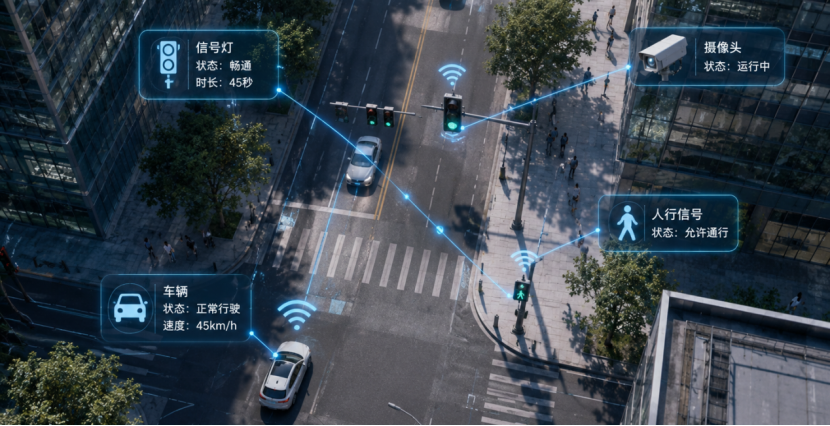
Against this industrial transformation backdrop, Smart Sensor Asia 2026 (SSA 2026) will be held at Shenzhen Convention & Exhibition Center (Futian) from June 24 to 26, 2026. With the core theme Connect the Physical, Empower the Digital, SSA 2026 focuses on closing the loop of sensing and decision-making between the physical and digital worlds. It gathers upstream and downstream enterprises, research institutions, industry experts and investment institutions across the global sensor industrial chain to showcase cutting-edge sensing technologies, innovative products and integrated solutions. As a top platform for industrial docking, technical exchange and win-win cooperation, it will serve as an industry weather vane leading the development of the smart sensing era.