In late February to March 2026, the conflict between the United States, Israel and Iran escalated fully, bringing a transformative turning point to the Middle East battlefield. The U.S. and Israel launched a joint military operation first, using anti-radiation missiles to precisely strike the core phased array radar sensors of Iran’s air defense system, aiming to paralyze its full-domain battlefield awareness capabilities. Iran immediately launched a counterattack, coordinating ballistic missiles and drone swarms for penetration strikes, successively hitting key sensor facilities such as the core THAAD early warning radar and PAVE PAWS long-range strategic early warning radar deployed by the U.S. military in the Middle East. Meanwhile, it initiated full-spectrum navigation confrontation in the Strait of Hormuz, jamming and suppressing satellite navigation and ship identification sensors on a large scale. This series of offensive and defensive confrontations points to one core truth: sensors are no longer auxiliary accessories in modern warfare. Instead, they are the decisive core factors that determine battlefield initiative and the trend of wars. Their anti-destruction, anti-jamming and networking capabilities directly define the offensive and defensive boundaries of modern warfare.

I. Target Detection and Positioning: Sensors Serve as the Battlefield’s "All-Seeing Eyes" and Determine Strike Precision
The outcome of modern warfare is often determined by reconnaissance and awareness capabilities even before the first ammunition is fired. "Detecting the enemy first and locking targets accurately" is the core prerequisite for all precision strikes, and the foundation of this capability relies entirely on the coordinated operation of various reconnaissance sensors. The offensive and defensive game in the latest U.S.-Israel-Iran conflict is essentially a battle for battlefield perception dominance centered on reconnaissance sensors.
The Systematic Reconnaissance Sensor Network of the U.S. Military
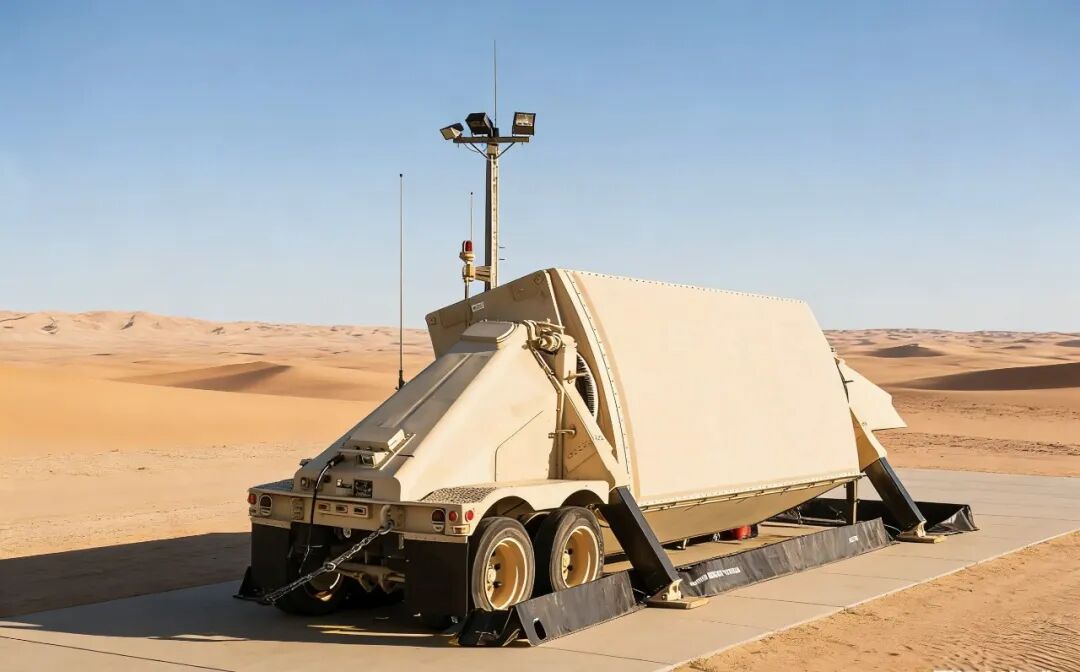
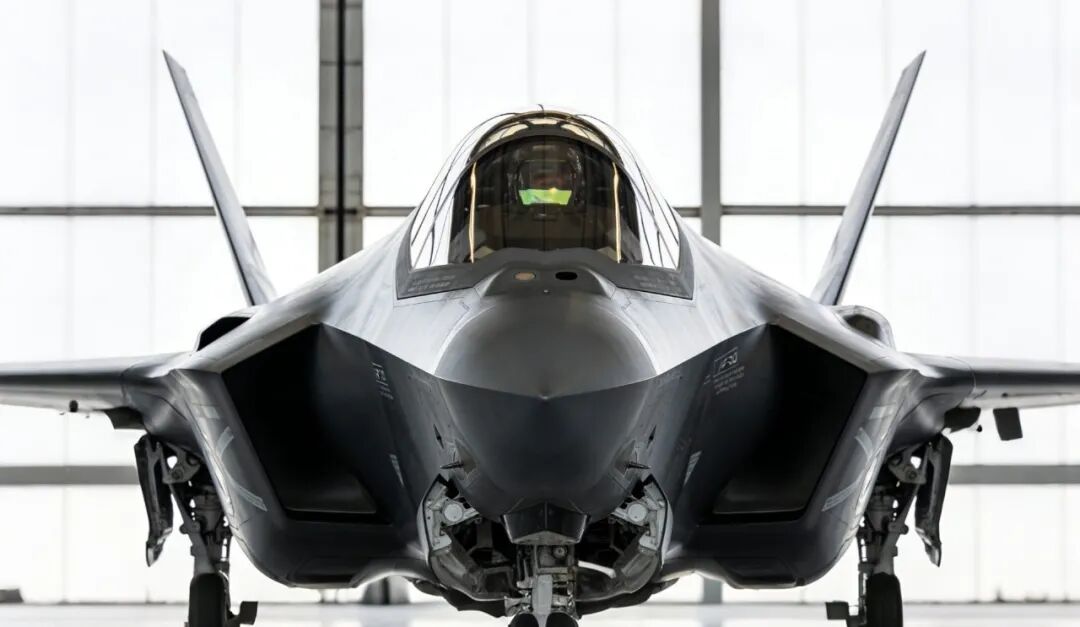
Relying on a multi-level sensor matrix, the U.S. military has built a comprehensive and systematic reconnaissance network. Space-based satellite sensors provide wide-area battlefield situational awareness and conduct large-scale monitoring of military movements across Iran. As the core sensor of the anti-missile system, the land-based AN/TPY-2 phased array radar has a detection range of over 2,000 kilometers. It can accurately capture and track the entire flight trajectory of Iran’s ballistic missiles and serves as the core pillar of the U.S. military’s anti-missile early warning system in the Middle East. In the air domain, the AN/APG-81 active electronically scanned array radar and Electro-Optical Distributed Aperture System equipped on F-35A fighter jets can complete high-precision detection of ground targets and data transmission while maintaining full stealth, providing real-time positioning support for air strikes. The electro-optical reconnaissance sensors of MQ-9 drones enable 24/7 continuous surveillance of key military facilities, ultimately forming an integrated three-dimensional reconnaissance closed loop covering space, air and land.
Iran’s Low-Cost Sensor Countermeasure Strategy
Instead of pursuing technological competition on an equal footing with the U.S., Iran has constructed a low-cost and multi-node sensor system based on its domestic industrial capacity and battlefield characteristics, achieving asymmetric reconnaissance through a combined application of sensors. Its core strategy is to make up for insufficient single-point performance with quantity and networking. In terms of system design, Iran deploys medium and short-range radars, electro-optical observation equipment and passive reconnaissance systems in combination. Radars are responsible for long-range target detection, electro-optical devices for identification and tracking, while radio spectrum monitoring and passive radars locate targets by analyzing electromagnetic signals, forming a multi-source complementary perception network. Meanwhile, Iran extensively uses low-cost drones and simple ground sensors as forward reconnaissance nodes to expand monitoring coverage. Although these devices have limited technical performance, distributed deployment and data integration allow them to continuously provide battlefield situational information. This sensor system featuring low cost, networking and multi-source perception enables Iran to maintain considerable reconnaissance and situational awareness capabilities when facing technologically superior adversaries.
II. Strike Guidance and Coordination: Sensors Act as the Operational Command Hub to Connect Offensive and Defensive Links

The core function of sensors goes far beyond mere detection. They convert multi-dimensional reconnaissance data into operational instructions in real time, realizing seamless connection between sensors, command nodes and weapon platforms, and forming a closed kill chain of detection, positioning, tracking and striking in high-intensity modern confrontations.
U.S. Military’s Sensor-Coordinated Strike Operations
The U.S. military builds a coordinated strike system with distributed airborne sensor nodes. Equipped with multiple sensors for electromagnetic reconnaissance and electro-optical detection, F-35 series fighter jets serve as forward perception nodes to complete signal collection, target identification and data relay. They network with drones, bombers, surface ships and other platforms through tactical data links to achieve multi-domain coordinated strikes. As the core perception unit of the anti-missile system, the AN/TPY-2 radar of the THAAD system conducts long-range detection, tracking and identification of ballistic missile targets and fire guidance, providing accurate data support for terminal high-altitude interception and acting as a critical data node of the anti-missile system.
Iran’s Sensor-Guided Countermeasures
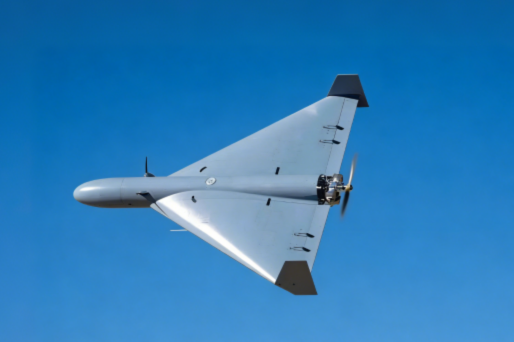
Iranian forces use electronic reconnaissance sensors to capture the radar frequencies and position information of enemy forces. Ballistic missiles and hypersonic weapons fitted with dual-mode seekers combining active radar and infrared imaging maintain target locking under strong electromagnetic interference. Hypersonic weapons adjust their trajectories in real time through optical and infrared terminal guidance sensors to improve penetration probability. Low-cost suicide drones adopt a combined sensing solution of inertial navigation and satellite correction to carry out precise close strikes on enemy radar stations, command nodes and other key targets, achieving cost-effective countermeasure capabilities.
III. Jamming and Countermeasures: Sensors Are the Core Focus of Battlefield Offense and Defense and Directly Determine Initiative
The role of sensors lies not only in their own application but also in suppressing the enemy’s sensor usage. The sensor confrontation between the U.S. and Iran has evolved into an independent operational dimension.
U.S. Military’s Sensor Suppression Methods
The U.S. military uses electromagnetic jamming sensors mounted on electronic warfare aircraft to specifically suppress the communication links and navigation signals of Iranian drones, attempting to cut off their reconnaissance-strike chains. The stealth design of F-35 fighters is essentially a countermeasure against radar sensors. By reducing radar cross-section, it greatly shortens the detection range of Iran’s S-300 air defense radars and weakens its early warning capabilities.
Iran’s Sensor Counter-Tactics
In terms of hard destruction, Iran focuses on high-value sensor nodes of the U.S. military and strikes THAAD radars with drones and ballistic missiles. This tactic directly damages the U.S. sensor system, creating partial gaps in its anti-missile early warning network and sharply reducing the efficiency of anti-missile operations. In terms of soft jamming, Iran’s electronic warfare systems equipped with multi-band jamming sensors generate false target signals and interfere with U.S. GPS navigation. This caused coordinate anomalies for more than 400 merchant ships in the Strait of Hormuz, and some foreign vessels relying solely on GPS sensors came to a standstill. In contrast, Chinese merchant ships maintained anti-jamming positioning relying on the triple-frequency signal system of Beidou navigation sensors, proving the importance of multi-sensor redundancy.
IV. Defense and Survival: Sensors Form the Battlefield Protection Barrier and Determine System Resilience
The anti-jamming capability, anti-destruction performance and redundant design of sensors directly determine the survival resilience of combat systems, which is also the core game focus in the 2026 U.S.-Iran conflict.
Defense Deficiencies of U.S. Military Sensors
The AN/FPS-132 PAVE PAWS strategic early warning radar at Al Udeid Air Base in Qatar costs 1.1 billion US dollars per unit. As the only strategic long-range early warning radar of the U.S. military in the Middle East, it undertakes the monitoring mission of ballistic missiles across Iran. On February 28, 2026, it was precisely struck by Iran’s ballistic missiles and Shahed-136 suicide drones, with supporting facilities catching fire. This exposed the fatal flaws of high-end fixed sensors: vulnerability at single points and insufficient resistance to low-cost saturation attacks. The AN/TPY-2 THAAD radar deployed in Jordan, the UAE and other regions costs about 500 million US dollars per unit. As the core fire control unit of the THAAD anti-missile system, it features fixed positions and obvious signal characteristics, making it a priority target for Iranian strikes. Satellite images have confirmed that the AN/TPY-2 radar at Muwaffaq Salti Air Base in Jordan was hit, paralyzing the entire THAAD system.
Survival Advantages of Iran’s Sensors
First is the tactic of low-cost consumable sensors. Each Iranian reconnaissance drone costs only tens of thousands of US dollars. Adopting swarm tactics for saturation attacks, they can be quickly replenished even if intercepted, forming an advantage in the sensor consumption war and inflicting losses on enemy high-value targets at a low cost. Second is the multi-mode backup and redundant design. Its missiles and drones generally adopt dual-mode seekers of active radar and infrared imaging, as well as a combined navigation system of inertial navigation and satellite correction, reducing the risk of interference to a single sensor. For instance, both the Hormuz anti-ship missile and the Fattah-2 hypersonic missile rely on dual sensor guarantees to lock targets and achieve detection-to-strike capability even in strong electromagnetic environments. Iran disperses electronic reconnaissance sensors and radar systems to avoid overall perception paralysis caused by single-point failure, maintaining basic perception and strike capabilities of the combat system under U.S. electronic suppression.
Sensor Gaming Reshapes the Core Logic of Modern Warfare
The U.S.-Iran conflict clearly reveals the core battlefield value of sensors, whose functions run through the entire process of detection, guidance, confrontation and defense.Basic Function: The sole source of battlefield awarenessWithout sensors, all military operations become impossible. The coverage range and precision of sensors directly determine battlefield transparency.Core Function: The key hub of operational linksSensors break down barriers between reconnaissance and strikes, enabling precision operations. Their coordination capability determines operational efficiency.Confrontation Function: The core focus of offensive and defensive gamesSuppressing enemy sensors and ensuring the normal operation of one’s own sensors have become independent operational objectives that directly affect battlefield initiative.
This conflict proves that modern warfare is no longer a competition of equipment quantity, but a contest of sensor capabilities. The side that can apply sensors more efficiently, suppress enemy sensors more accurately, and build a more flexible redundant sensor system is more likely to gain an advantage in confrontations. Sensors have completely upgraded from auxiliary tools to the core decisive variable of warfare outcomes.
*Part of the materials and data in this article are sourced from the internet for reference only.