


June 24-26, 2026
Shenzhen Convention and Exhibition Center (Futian)


Over the past decade, the smart home appliance industry has completed a full technology cycle. From basic internet connectivity to voice control and app management, and now to the gradual shift toward scenario-based and systematic solutions, the entire industry is undergoing a profound structural transformation. Driven by sensor and AI technologies, home appliances are becoming increasingly intelligent and feature-rich. In essence, this is not merely a simple product upgrade, but a redefinition of "the way of family life".
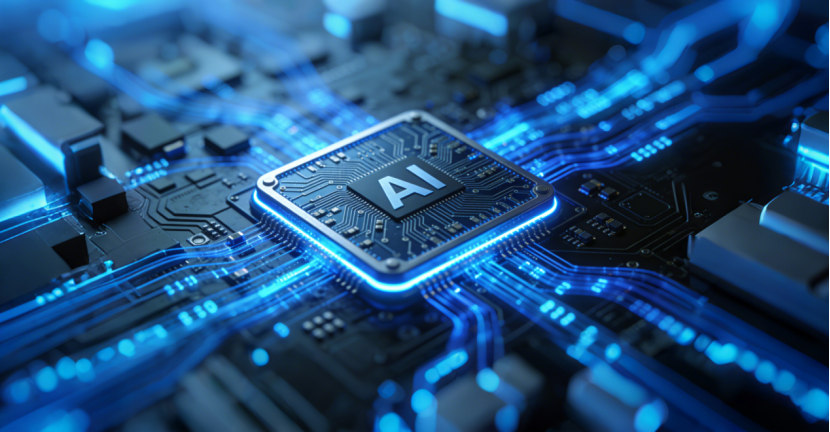
Meanwhile, advancements in sensor technology are reshaping the industry landscape. The operating logic of smart home appliances is essentially a closed loop of "perception – decision-making – execution", with perception as the most fundamental link. Those who can perceive the environment and user status more accurately will gain a first-mover advantage in the competition for intelligence. Temperature and humidity sensors, gas sensors, vision modules, biometric sensors, and more are being widely adopted in various home appliances, enabling devices to not only "see" and "hear", but also "perceive" and "judge". This enhancement in capabilities has brought smart home appliances closer to natural human-like interaction, shifting product differentiation from the functional level to the underlying capability level.
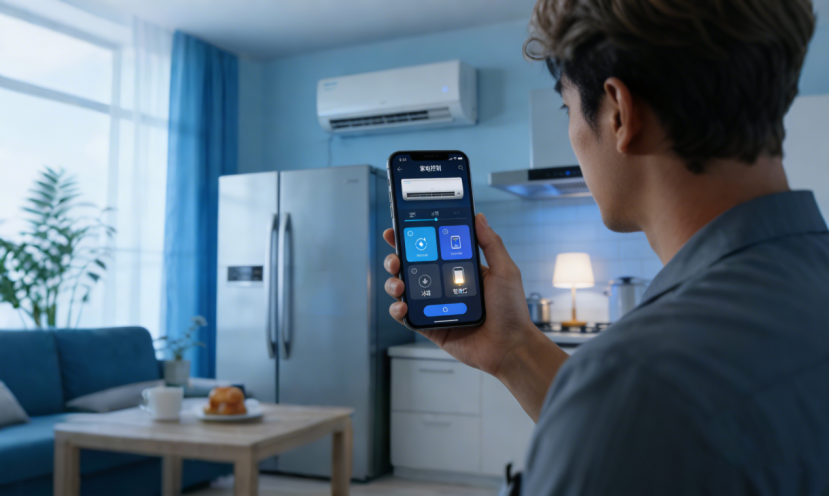
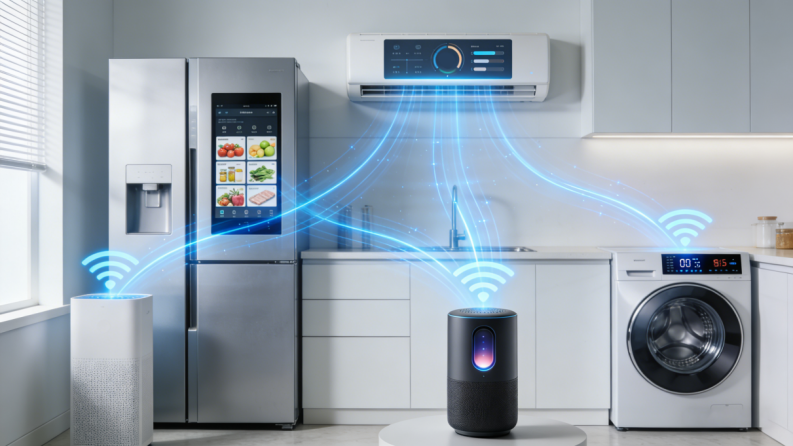
With enhanced perception and AI capabilities, the development path of smart home appliances has changed significantly. In the past, enterprises focused on adding functions to individual products; now, they are shifting to holistic design around "scenarios". Users no longer merely purchase an air conditioner or a washing machine, but build a complete lifestyle solution. For example, air management is no longer the task of a single device, but a collaborative effort of air conditioners, air purifiers, and fresh air systems. Clothing care extends beyond the washing machine to a comprehensive system covering washing, drying, and storage. Product boundaries are broken, service value is further highlighted, and the relationship between users and brands has evolved from one-time transactions to long-term connections.
This change has also complicated the industry's competitive landscape. Traditional home appliance manufacturers are no longer the only players; internet companies, mobile phone manufacturers, chip enterprises, and even tech startups have entered the market. Internet companies seek to seize entry points and data platforms, mobile phone brands expand into home scenarios through ecosystem extension, and chip and sensor enterprises build barriers at the underlying technology level. The participation of diverse players has made smart home appliances no longer just a segment of manufacturing, but a typical cross-border integrated industry.
Against this backdrop, the attitude of the capital market has also shifted dramatically. In the early days, smart home appliances witnessed a "concept-driven" investment boom, with massive capital flowing into smart hardware brands in an attempt to replicate the growth model of internet consumer goods. However, as the market matured, the limitations of this model gradually emerged: long hardware product life cycles, limited profit margins, and high channel costs made it difficult for enterprises driven solely by branding and marketing to achieve sustainable growth. Capital has begun to re-evaluate the sector, turning its attention to upstream links with greater core value and certainty.
A notable trend in the past two years is the shift of investment focus from finished products to upstream core technologies. Chips, sensors, and communication modules have become key targets for capital deployment. These sectors feature higher technical barriers and cross-industry reusability, serving multiple scenarios such as smart home appliances, automotive, and industrial automation, thus offering broader growth potential. Meanwhile, the rise of AI technologies has made enterprises with algorithm R&D and data processing capabilities highly sought after by investors. Investors increasingly value whether enterprises possess "core intelligent capabilities" rather than just sellable hardware products.
Of course, after the overheating in the early stage, overall capital has become more rational. Investment pace is more cautious, project screening standards have been significantly raised, and profitability, supply chain management capabilities, and large-scale implementation capabilities have become key considerations. Projects relying solely on concept packaging and business stories can no longer attract investment; only enterprises that achieve closed-loop integration in technology and commerce can stand out.