



June 24-26, 2026
Shenzhen Convention and Exhibition Center (Futian)


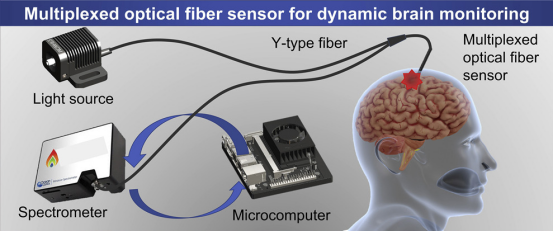
As an advanced sensing technology, fiber optic pressure sensors have been widely used in numerous fields due to their unique advantages, such as immunity to electromagnetic interference, high precision, compact size, and ability to implement distributed measurements. The medical field's stringent requirements for high precision, reliability, and safety are highly compatible with the characteristics of fiber optic pressure sensors, driving their continued expansion in the medical industry. From disease diagnosis to treatment monitoring, fiber optic pressure sensors are becoming a key component of medical technology innovation, providing strong support for improving medical quality and patient outcomes.
01
Operating Principle
The basic principle of fiber-optic sensors stems from the behavior of light propagating through glass or plastic fibers. Light propagates through the fiber by continuous reflection within the fiber core—a process known as total internal reflection. The fiber core is typically surrounded by a cladding with a slightly lower refractive index. This structural design ensures that the optical signal remains highly stable over long transmission distances.
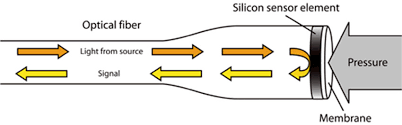
When the external environment, such as temperature, pressure, or strain, fluctuates, the physical or optical properties of the optical fiber also change. These tiny perturbations cause changes in the intensity, wavelength, phase, or polarization of the optical signal. Advanced detection systems, such as interferometers and spectrometers, can identify and interpret these changes, enabling contactless monitoring of the environment.
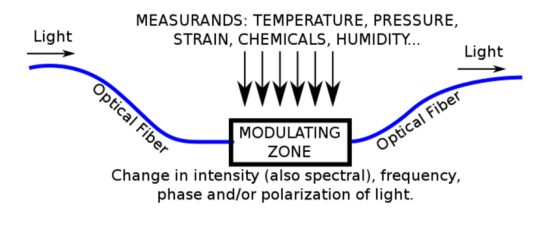
02
Technical Features
1. Strong resistance to electromagnetic interference: Medical environments are home to numerous electromagnetic devices, such as magnetic resonance imaging (MRI) machines and electronic surgical instruments. Traditional electrical sensors are susceptible to electromagnetic interference, impacting measurement accuracy. Fiber optic pressure sensors use optical signals as a transmission medium, making them immune to electromagnetic interference and capable of stable operation in complex electromagnetic environments, ensuring the reliability of medical monitoring data.
2. High precision and sensitivity: They can accurately measure minute pressure changes, meeting the medical field's demand for monitoring subtle physiological parameters. For example, in cardiovascular disease diagnosis, they can precisely measure changes in blood pressure within blood vessels, assisting doctors in determining the degree of vascular stenosis and the severity of the disease.
3. Small size and miniaturization: They can be easily integrated into various minimally invasive medical devices, enabling minimally invasive or even non-invasive pressure monitoring of specific body parts. For example, miniature fiber optic pressure sensors can be integrated into devices such as urinary catheters and intravascular catheters, acquiring accurate pressure data without increasing patient trauma.
03
Technical Development Status at Home and Abroad
Developed countries such as Europe, the United States, and Japan started early in the research and development of fiber optic pressure sensor technology and are in an internationally leading position. Luna Innovations, a US company, has achieved significant success in the field of fiber Bragg grating (FBG) sensor technology. Its products are widely used in high-end fields such as medicine and aerospace. Its high-precision fiber optic pressure sensors can measure strain at the picometer level, providing a powerful tool for monitoring minute biomechanical changes in medical research.
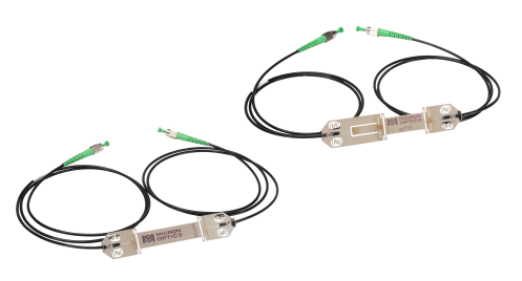
Fiber Bragg Grating
Sensuron, a German company, specializes in distributed fiber optic sensing technology. Its applications in the medical field include monitoring changes in pressure distribution in human tissues. For example, it can assess limb pressure status during rehabilitation therapy and provide data support for the development of personalized rehabilitation plans.
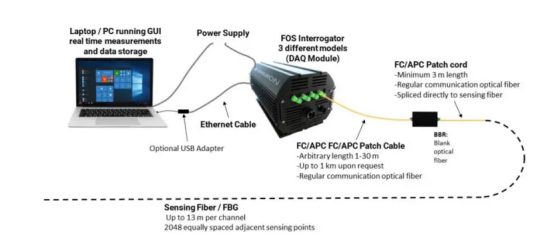
Sensuron's fiber optic sensing system layout
Japan's Fujikura Corporation has advantages in fiber optic manufacturing and sensor packaging technologies. Its high-temperature, high-pressure fiber optic pressure sensors can meet measurement requirements in specialized medical environments, such as monitoring pressure changes at the treatment site during deep hyperthermia therapy.
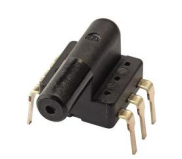
Fujikura Pressure Sensor
Many domestic companies and research institutions are actively developing and leveraging their expertise in the field of fiber-optic pressure sensors. Wuhan University of Technology Optical Technology Co., Ltd. specializes in fiber-optic sensing technology. Its pressure sensor products have penetrated the medical field, playing an important role in real-time monitoring of human cavity pressure, such as changes in the urinary system and digestive tract, providing critical data support for medical diagnosis and treatment.
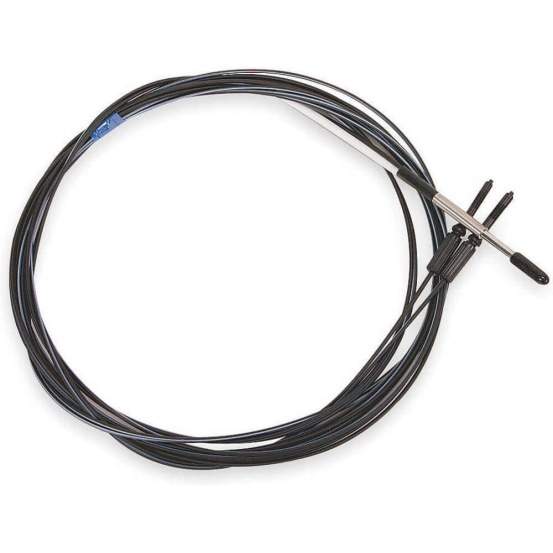
Shenzhen Taichen Optical Communication Co., Ltd. has taken a different approach, focusing on developing miniaturized fiber optic sensors suitable for force feedback systems in minimally invasive surgical instruments. These sensors enable surgeons to accurately sense tissue forces during surgery, preventing tissue damage and providing strong support for the refined development of minimally invasive surgery.
Research institutions such as the Institute of Semiconductors of the Chinese Academy of Sciences and the Shanghai Institute of Optics and Fine Mechanics are at the forefront of the industry, leading the development of advanced technologies. They have developed a series of innovative medical solutions based on fiber gratings (FBGs) and interferometric fiber sensors, continuously expanding the application boundaries of fiber optic pressure sensors in medical scenarios and laying a solid technological foundation for industry upgrading.
04
Applications in the Medical Field
Diagnosis and Treatment of Cardiovascular Diseases
Fractional Flow Reserve (FFR) Measurement: FFR is an important indicator for determining whether critical coronary artery stenosis lesions require percutaneous coronary intervention (PCI). Baiweishen Technology integrates miniature fiber optic pressure sensors into its FFR system. By placing the sensor at the patient's lesion site during interventional surgery to detect pressure, it helps doctors accurately determine whether a patient needs stent placement, the number of stents to be placed, and their placement. This effectively controls medical insurance costs and reduces unnecessary stent surgery consumables.
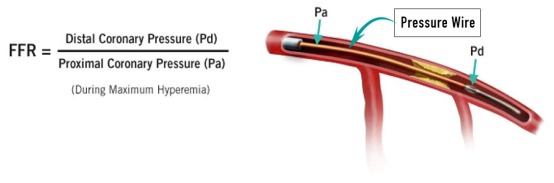
Urinary System Disease Monitoring
Urinary Renal Pressure Guidewire: Used to monitor pressure during laser lithotripsy, it helps doctors control pressure during the procedure, preventing kidney damage caused by excessive pressure and improving lithotripsy effectiveness.
Urodynamic monitoring: By implanting a fiber optic pressure sensor, precise measurements of intrabladder pressure changes can be used to assist in the diagnosis of urinary system dysfunction, such as overactive bladder, and inform treatment planning.
Other applications
Intracranial pressure monitoring: In neurosurgery, real-time monitoring of intracranial pressure is crucial for patients with craniocerebral injury, cerebral hemorrhage, and other conditions. Fiber optic pressure sensors enable minimally invasive intracranial pressure monitoring, providing timely information on intracranial pressure changes, providing critical information for clinical treatment and reducing the risk of complications associated with abnormal intracranial pressure.
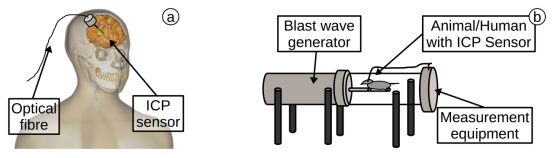
Gastrointestinal pressure monitoring: Used to monitor gastrointestinal pressure and assist in the diagnosis of gastrointestinal motility disorders such as gastroesophageal reflux disease and functional dyspepsia. By understanding the distribution and changes in gastrointestinal pressure, treatment can be guided and treatment efficacy evaluated.
05
Market Prospect Analysis
Market Size Forecast
With advances in medical technology and the growing demand for precision medicine, the market size of fiber optic pressure sensors in the medical field is experiencing rapid growth. According to publicly available data, my country's fiber optic sensor market is projected to grow from 15.1 billion yuan to 28.8 billion yuan from 2019 to 2023, with a compound annual growth rate of 25%. my country's fiber optic sensor market is expected to reach 46.2 billion yuan by 2028.
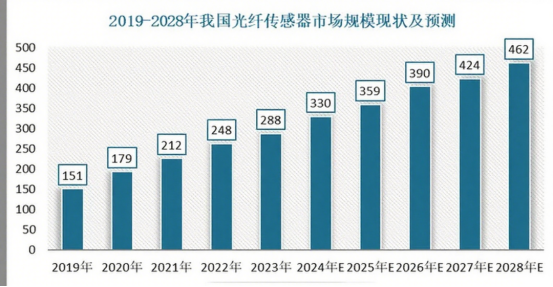
Data source: Public data, compiled by Guanyan Tianxia
Based on product segments, the current fiber optic sensor market in my country mainly includes fiber optic gyroscopes, fiber grating sensors, fiber optic current sensors, and fiber optic hydrophones. Fiber optic gyroscopes (FGs) dominate the market. Data shows that in 2023, the market size of my country's FGs was 22.14 billion yuan, accounting for 76.88% of the total fiber optic sensor market. The FG market is expected to reach 36.38 billion yuan by 2028.
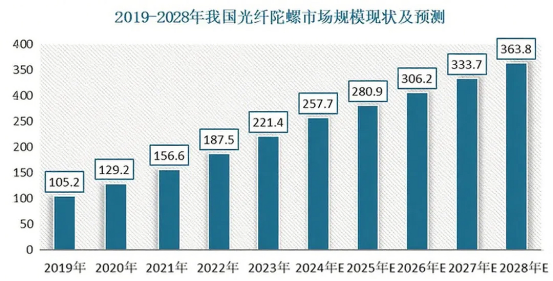
Data source: Public data, compiled by Guanyan Tianxia
Driving Factors
Demand for Medical Technology Innovation: Modern medicine pursues higher diagnostic accuracy and treatment effectiveness. The high precision and anti-interference characteristics of fiber optic pressure sensors meet this demand, driving their widespread application in medical devices.
Aging Population: As the global population ages, the incidence of chronic diseases such as cardiovascular and urinary tract diseases is rising, and the demand for diagnosis and treatment of these diseases is increasing, driving market demand for fiber optic pressure sensors in the medical field.
Policy Support and Financial Investment: Governments around the world have introduced policies to support medical technology R&D and industrial development, increasing funding for medical device innovation.
Challenges and Opportunities
Technical Barriers and Competitive Pressure: High-end products are still limited by accuracy and stability. International companies have a market advantage, and domestic companies need to increase R&D to enhance their competitiveness.
Market Awareness and Promotion: As a relatively new technology, medical market awareness is insufficient. Promotion is needed to increase acceptance among medical institutions and facilitate market expansion.
Customized Demand and Industry Collaboration: Medical needs are diverse and customized, requiring collaborative R&D between companies and medical institutions. Promoting industry collaboration and improving the ecosystem can enhance quality control and supply capabilities, creating new development opportunities.
06
Conclusion
Fiber optic pressure sensors, with their unique technical advantages, have shown broad application prospects in the medical field. Continuous technological advancements both domestically and internationally have provided strong support for their in-depth application in the medical industry. Fiber optic pressure sensors are playing an increasingly important role in a wide range of fields, from cardiovascular disease diagnosis to urinary system disease monitoring. By strengthening technological research and development, increasing market awareness, meeting customized needs, and promoting collaborative industry development, fiber optic pressure sensors will bring more innovation and change to the medical industry and make greater contributions to improving human health.
Of note, the Asia Smart Sensor and Application Technology Expo will be held at the Shenzhen Convention and Exhibition Center (Futian) from June 24th to 26th of next year. This expo will focus on cutting-edge technologies and innovative applications in the field of smart sensors, bringing together a wide range of fiber optic pressure sensor companies to further promote the in-depth application of smart sensor technology in various fields and promote industrial upgrading. Scan the QR code below to stay updated on the exhibition.